LINKS
PM_SPOTS
LATEST_POSTS
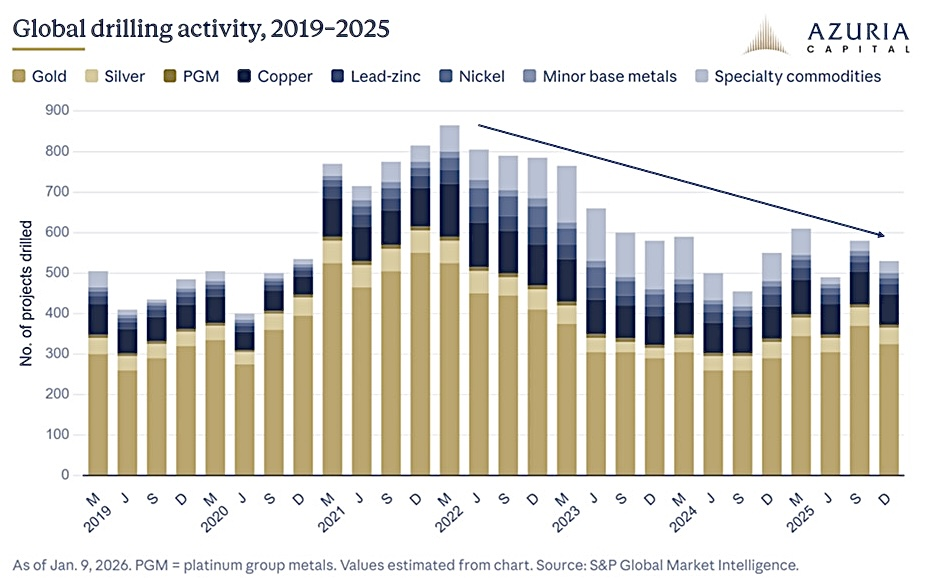
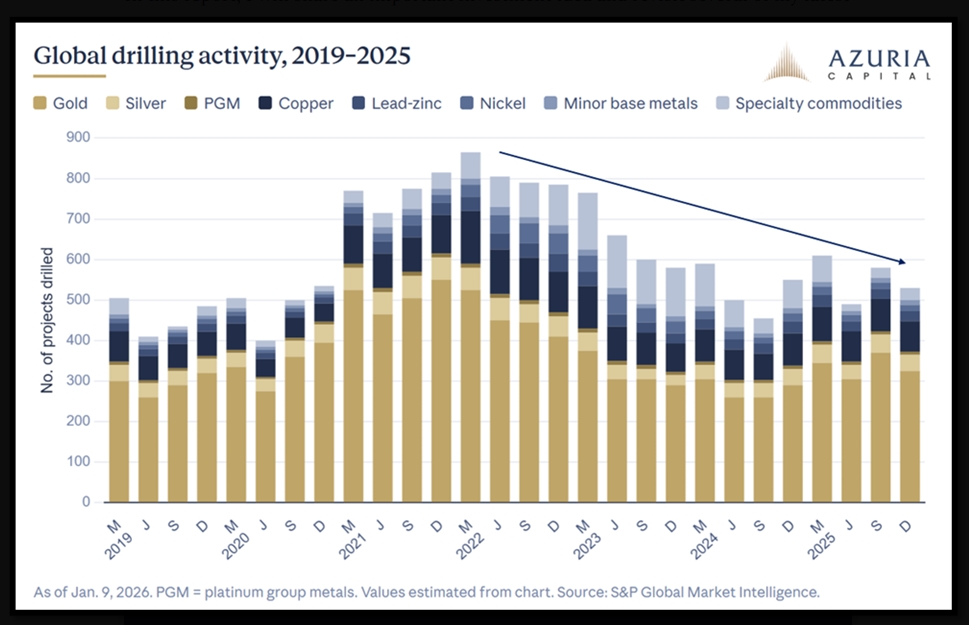
Global mining and exploration drilling activity has slowed sharply, says macro strategist Tavi Costa of Azuria Capital.
If companies are not drilling today, there will be no meaningful supply response for years while structural demand for metals continues to accelerate.
Game on for metals and mining.
It is increasingly clear that there is a problem with custody at the Federal Bank of New York.
Earlier this year the Banque de France announced that it had sold 129 tonnes held at the New York Fed and simultaneously bought 129 tonnes in London.
The reason given was, the Banque de France wanted new bars for the older non-standard bars held in New York. This is poppycock.
We can take all this as evidence that at least three major European central banks have good reason to believe
that their gold held under earmark in New York has been sequestered by the American authorities or otherwise gone missing.
The blistering rally in the gold price, which has doubled in the last three years, and accompanying surge of demand from wealthy individuals who insist on holding their gold in physical bar form,
have prompted a small rush of activity in the normally sleepy vaulting sector.
Heavy buying from central banks, fears about the future of the US dollar,
investor concerns about public debt and geopolitical chaos have together created a frenzy of buying and selling gold unlike anything industry veterans have seen.
Beijing is no longer behaving like a central bank merely adjusting the composition of a portfolio.
It is behaving like a government preparing for a monetary system in which it intends to depend less on Western price discovery, Western custody and Western promises.
China is aggressively accumulating bullion, expanding the Shanghai Gold Exchange, building physical-delivery links through Hong Kong,
increasing vault capacity, strengthening renminbi-denominated settlement and moving more of the infrastructure surrounding gold into jurisdictions it controls.
Any one of these developments might be explained as prudent financial modernization.
The 5-Layer Prompt Stack is an enterprise-grade prompt engineering framework designed to safely steer
Large Language Models (LLMs) through highly complex, capital-intensive, and safety-critical industries like mining and oil & gas.
Please Stop asking Claude to find the ‘most promising’ oil company.
That’s a fair question, and it’s the same one I asked myself the first time I tried using AI to screen a commodity sector.
The answer isn’t “the AI is bad at this.”
The answer is that oil, gas, and mining are some of the worst sectors to prompt casually , and some of the best to prompt well.
Many investors choose to own physical silver because they believe there is a fundamental difference between the paper silver market and the physical silver market.
At first glance, it may seem that the price of silver is determined primarily by physical supply and demand.
If demand increases, prices should rise. If demand falls, prices should decline.
In reality, today’s silver market is considerably more complex.
An empirical analysis of the systemic disintegration of real monetary reserves and the critical moment when the majority will no longer afford financial protection.
Those who act now, before prices reflect complete market dislocation, will hold a structural advantage impossible to recover later.
Those who wait for social validation or media confirmation will discover that programmable digital currencies offer no exit when the system imposes capital controls.
Every journalist assumed that Gold would rise during a war. However, higher oil prices fueled inflation fears and, with them, concerns about higher interest rates.
Let’s paint the following scenario on the wall, even if we aren’t convinced of it—yet.
The war with Iran escalates once again. In addition to the Strait of Hormuz, the Houthis also block the Bab al-Mandab Strait, which controls access to the Red Sea and thus to the Suez Canal.
The price of Oil shoots up again. This time, however, the price of Gold also rises sharply, summarily ignoring the potential threat of inflation.
Logical? Not necessarily. But as is well known, the market has mastered the art of flexible logic.
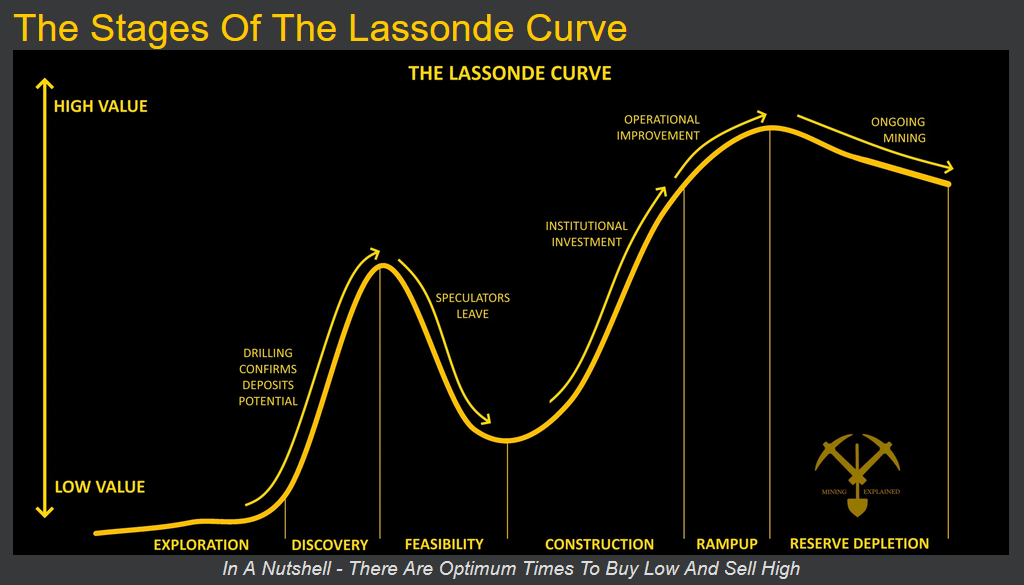
The Lassonde curve is a graphical representation of the typical lifecycle of a Junior Mining Company from Exploration to Development.
It breaks the cycle down into distinct stages each, of which is important for investors to understand in order to guide their expectations and make better investment decisions!
COMEX registered Silver inventory up 11% in thirty days.
The bleed that ran from October straight through April stopped dead in May, turned around, and has been Climbing ever since.
London’s SLV stock is back to 408 million ounces, a level last seen in March.
You want to know how they “fixed” it? They just banned one of the largest buyers in May
You can’t legislate the metal into existence. But you absolutely can legislate the customer out of the metal.
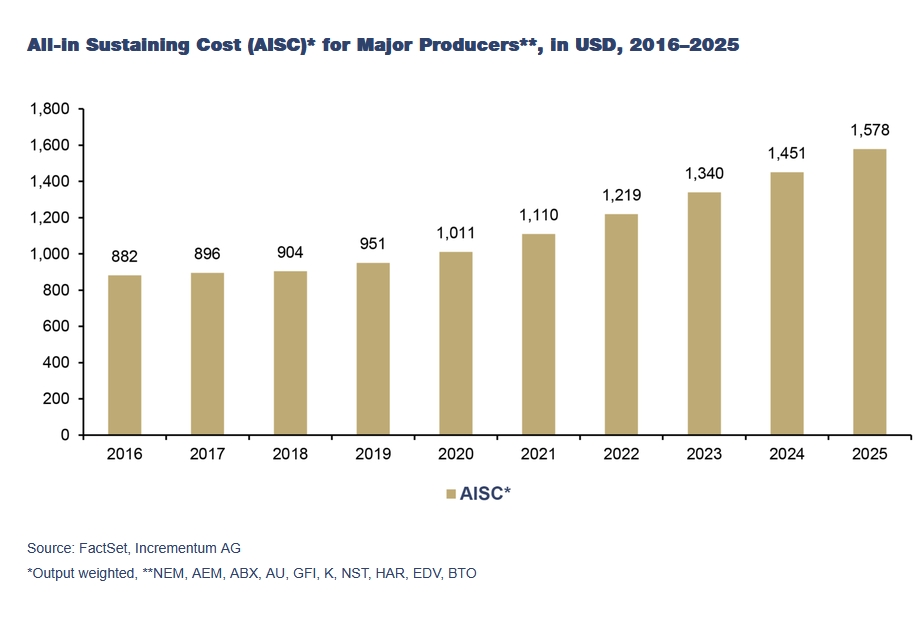
It is one of the most remarkable contradictions in the financial world:
The companies that extract gold from the earth – the very asset that has served as humanity’s ultimate store of value for millennia –
generally tend to sell it promptly, only to hold the very currency whose debasement they tell their investors to avoid.
This cognitive dissonance is not a peripheral issue.
It lies at the heart of the mining sector’s chronic undervaluation and its inability to attract capital beyond a narrow niche of precious metals enthusiasts.

Every Global Public Investor report (GPI) captures a moment in the evolution of official investment,
with some years defined by a single shock and others by a turning point in markets.
This year’s report is different because it points to something more durable: a world in which volatility is no longer a phase to get through,
but a condition to be managed. Geopolitical risk has become broader and more persistent, moving beyond last year’s focus on trade protection.
In 2026, reserve managers’ concerns centre on the Middle East conflict, unpredictable US foreign policy and energy security.
OMFIF is also forming a new working group to examine the geopolitical importance of gold and precious metals to the global economy.
The Chinese state is bailing out of the dollar, buying almost anything just to get rid of them.
Speculation in gold and silver is being shut down for citizens with a cut-off date of 24th July (i.e. no more paper contracts other than those with high margin) and hoarding physical gold through gold accumulation accounts is encouraged.
There is a timeline of events which strongly suggests that China expects that the global dollar-based fiat currency regime is coming to an end.
Miners Revenue Exposure To Silver
Tavi Costa, June 20, 2026
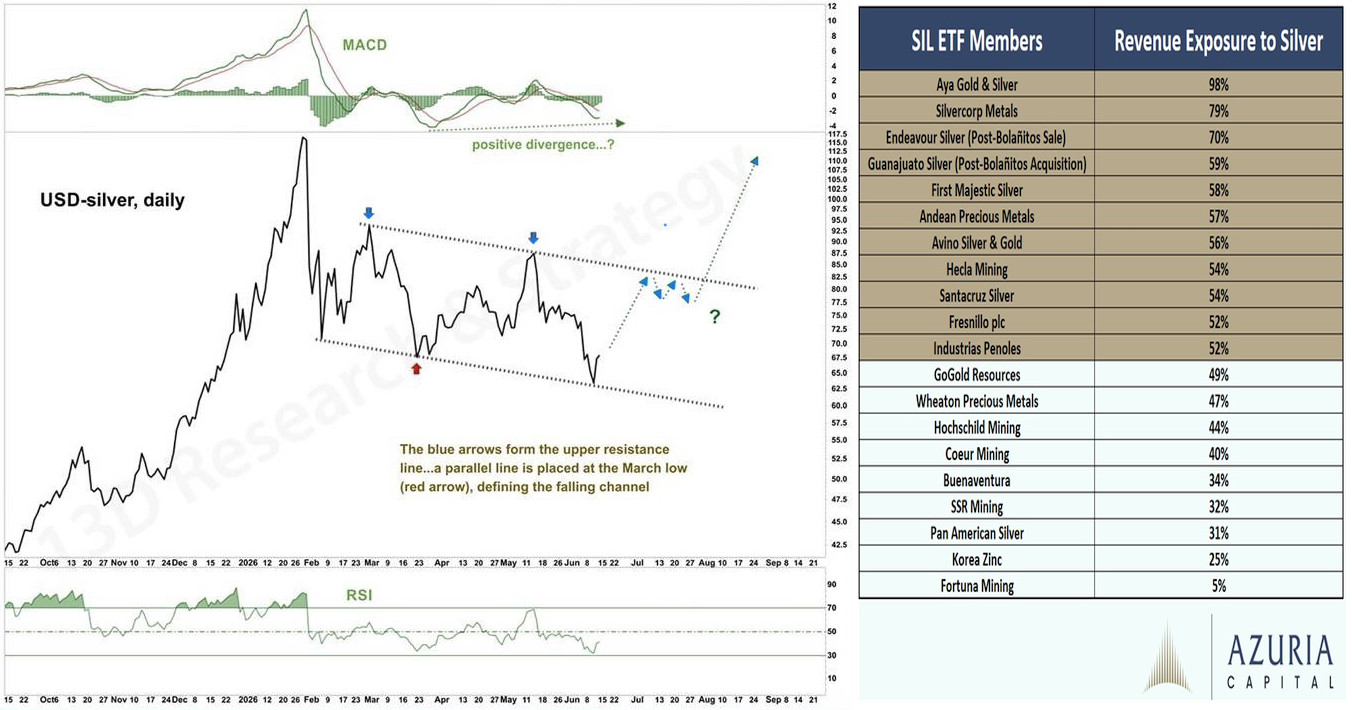
Companies that generate the majority of their revenue from silver provide "pure-play" exposure.
Today it is incredibly difficult to gain direct exposure to silver through mining equities.
The silver market is small, and many companies marketed as silver producers actually derive a substantial portion of their revenue from gold, copper, zinc, or lead.
Once you screen for companies with meaningful silver exposure, sufficient scale, liquidity, and acceptable jurisdictions, the list becomes remarkably short.
In other words, investors looking for true leverage to silver prices have far fewer options than they might initially assume, which is one reason quality silver assets tend to be so valuable.
Silver: THE DEFICIT IS NOT COMING — IT’S HERE
Silver Acedemy, June 11, 2026
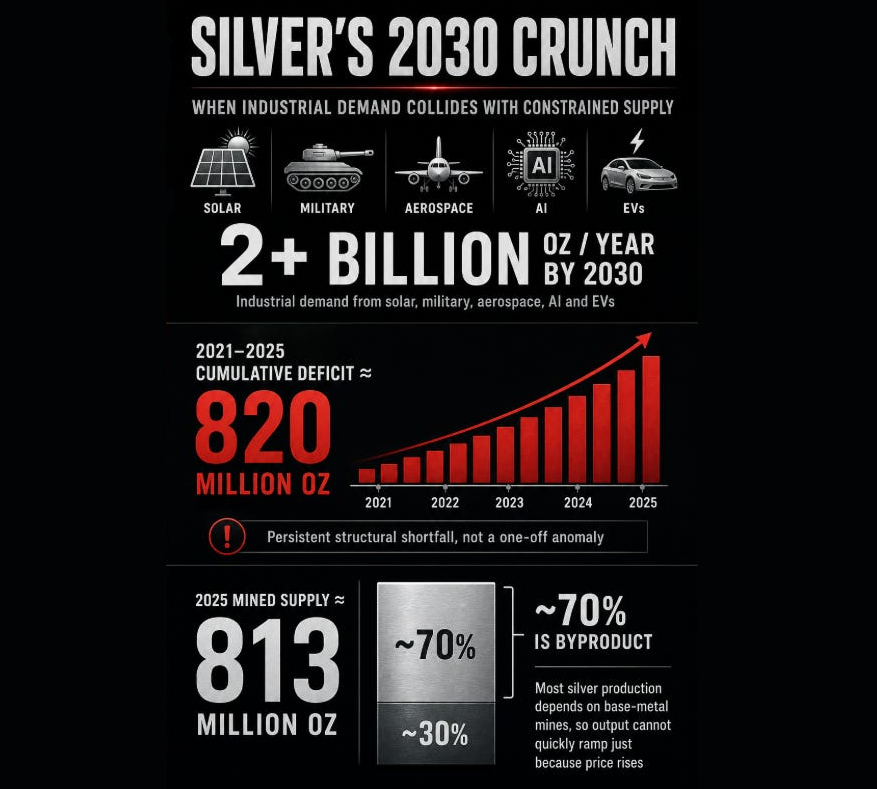
By 2030, silver demand from solar panels and electric vehicles alone is projected to exceed 1.5 billion ounces annually.
This isn’t optional demand. It’s hardwired into global energy policy and industrial transformation.
In horse racing, the bookies make lots of money at the expense of the punters. It’s just the same in financial markets.
This is why at MacleodFinance we discourage trading gold, insisting on stacking in the knowledge that the risk is in currencies and credit and not gold.
Gold is legal money without counterparty risk, and has been remarkably stable in its purchasing power over long periods.
Patience is required.
Celtic Gold: Florian Grummes, May 2026
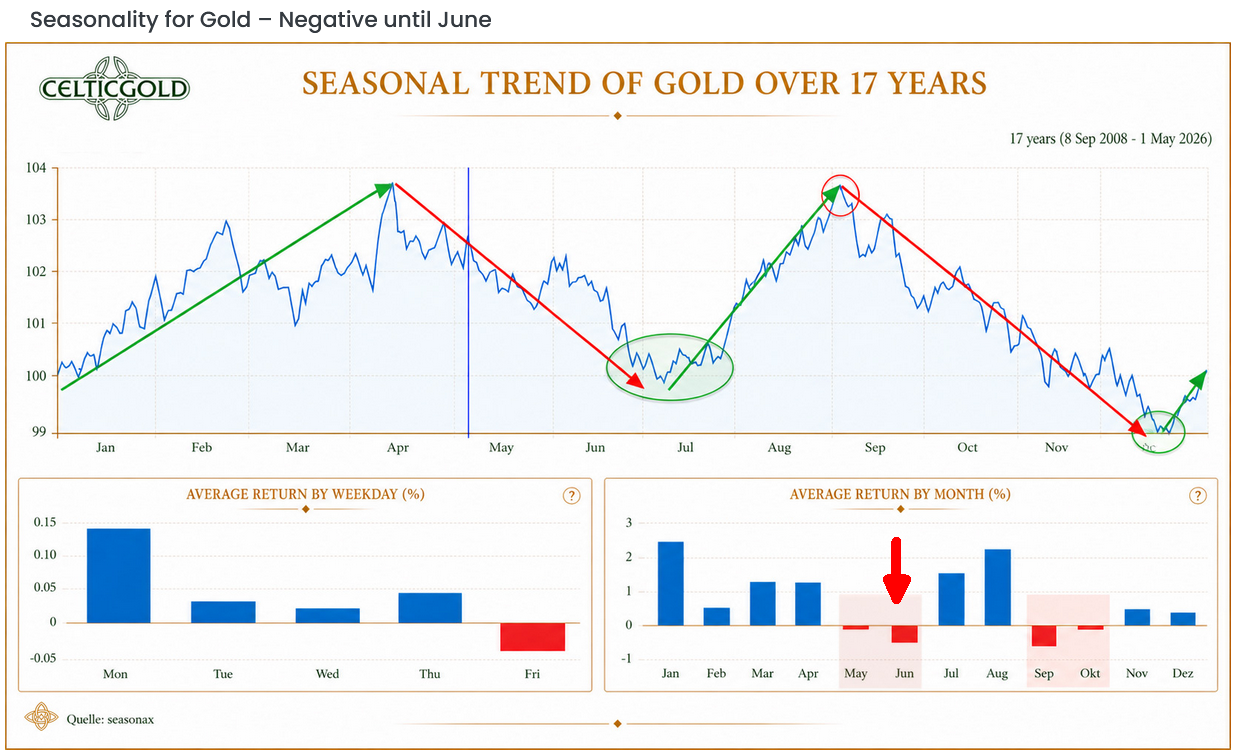
Typically, gold forms a sustainable bottom in late spring or early summer, forming the basis for a summer rally. Until then, patience is required.
On May 1, China halted exports of sulfuric acid. The reaction across commodity markets has been immediate and severe.
But the deeper significance of this moment extends far beyond a single trade restriction. It reveals something the mining industry has been slow to acknowledge: sulfur is not waste.
It is one of the most strategically important materials on Earth. And the inability to manage it is the binding constraint on copper production today.
I get the appeal. A silver coin in your hand feels more honest than another government promise. You can drop it on a table and hear the argument.
When you measure silver in dollars, you're measuring a hard asset against a unit that gets actively diluted on purpose.
But there's a better yardstick. It just doesn't fit on a bumper sticker.
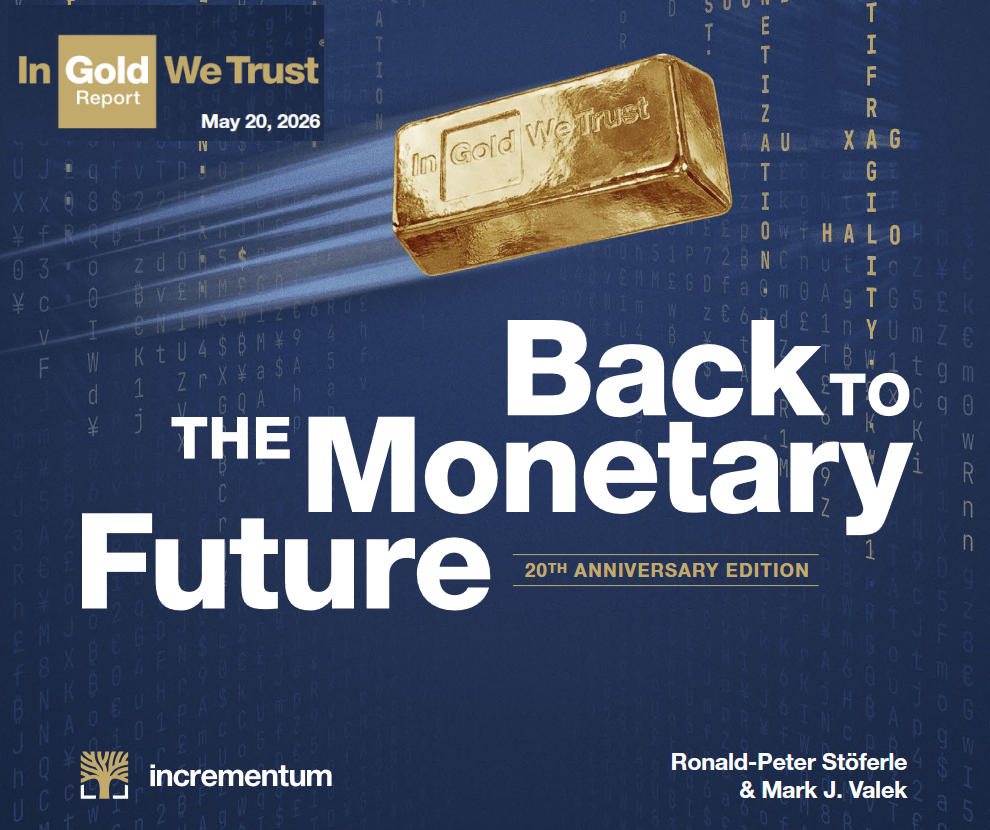
The In Gold We Trust report celebrates its 20th edition.
“Back to the Monetary Future” captures the essence of 20 years of the In Gold We Trust report: The future of money lies in its past.
The remonetization of gold is in full swing.
With silver prices proving resilient at these levels, miners are trading at some of the cheapest valuations in their history.
These companies are delivering record cash flows with exceptionally high margins.
Here’s a deeper dive into the silver market — one of the most important macro themes of this decade.
The DXY is a perfectly preserved fossil from 1973, frozen in a world that no longer exists, maintained by a private company with every financial reason to leave it that way.
It is useless for long-term analysis of actual dollar strength. It’s excellent for tracking the dollar-euro relationship and providing a liquid trading vehicle.
Foreign governments are dumping U.S. Treasuries to stockpile gold, oil and commodities
amid the latest Middle East meltdown—potentially weakening the greenback and importing fresh inflation to American shores.
The immediate drama is geopolitical: Iran asserting control, the U.S. responding with naval force, and global energy markets convulsing.
But beneath the headlines, a longer-term economic reckoning is accelerating.
After the increasing weaponization of the dollar, culminating in the seizure of Russian assets in the wake of the war in Ukraine, and the mooting of a Mar-a-Lago accord,
the US currency has just passed another milestone in its declining dominance.
Dollar-denominated reserves - ie central bank holdings - adjusted for valuation effects are now lower than gold reserves for the first time since the International Monetary Fund started publishing the data in the late 1990s.
The Warnings We Refused to Hear
Monetary Realism ‘Those unaware are unaware of being unaware', April 06, 2026
For more than twenty-five years, while the global economy expanded, markets reached new heights, and confidence in modern financial systems grew almost religious in intensity,
several voices repeated the same warning with unnerving consistency. They spoke about debt. They spoke about currencies.
They spoke about the illusion of stability created by money that could be produced without limits.
And year after year, they were politely dismissed as overly pessimistic, excessively cautious, or simply out of touch with the modern world.
But History Never Shouts. It Repeats in Whispers.
As the world becomes more financially unstable, politically coercive, and economically distorted,
how should smart investors position themselves today: not just to preserve purchasing power, but to come out of this period with more capital, more optionality, and greater personal freedom?
Doug Casey tells you how!
From discovery to production, the process takes, on average, about 15 years — and that’s with a high failure rate along the way, with most projects never making it to production.
Capex, when adjusted for gold, is down roughly 83% from its prior peak in the 2011 cycle.
This is why, when I hear confident calls that mining equities have already peaked, struggle to take them seriously. Not out of arrogance — but from studying how this industry actually behaves over time.
Some geological formations reshape continents. Others reshape economies.
In South Africa, the Witwatersrand Basin belongs to both. Its rocks formed roughly 2.7 billion years ago, during the Archean Eon, when Earth’s crust was still stabilizing and the atmosphere held little oxygen.
Today, the ridges outside Johannesburg appear dry and unremarkable, broken by highways, neighborhoods, and the skeletal frames of old mining towers.
Nothing at the surface hints at the scale of what lies beneath.
Mining is defined by long development timelines, rigid supply growth, and capital cycles that unfold over decades, not quarters.
The forces behind today’s repricing — prolonged underinvestment, constrained supply, and rising structural demand — remain intact and unresolved.
What we have seen to date is the awareness phase of a bull market.
We are experiencing the beginning of one of the largest rotations out of financial assets and into hard assets in modern history.
The objective of I-ROX’s pulsed-power technology is to reduce the energy consumption of conventional grinding mills by 80%,
while increasing metal recovery during flotation as a result of increased mineral liberation and a reduction in the production of ultrafine particles.
I-ROX is collaborating with BHP and Codelco to advance the technology, including plans for a pilot plant at one of their mines.
For years, bulls of gold and silver have complained about how derivatives have been used to suppress their prices.
Their dreams of the practice ending could be coming true.
The rise in values for gold and commodities generally is the same thing as a decline in the value of the dollar for the purpose of dealing in commodities.
Foreign holders of dollars will be acutely aware of the consequences, dumping dollars increasingly to hoard commodities.
In today’s volatile financial landscape, understanding the mechanics behind price movements in precious metals is crucial for informed decision-making.
This edition delves into the strategies employed by major financial institutions—often referred to as “Banksters”—to influence the daily openings on the COMEX for Gold and Silver.
These tactics, centered around short positions and exchange-for-physical (EFP) trades, allow for significant price suppression while maintaining profitability.
On Friday, January 30, 2026, the world learned (or rediscovered) just how grotesquely rigged the paper gold and silver markets truly are.
Despite no change whatsoever in global supply and demand forces, silver went from a $120 near-high on Thursday to a $78 low on Friday, marking this as the largest single-day crash (35%) in the silver market in 44 years.
It goes without saying that such price moves don’t happen naturally.
Imagine you found a magical bank that lets you borrow money at 0 percent interest.
Naturally, you’d take that free money and put it into a high-yield savings account or the stock market to pocket the difference, right?
That, in a nutshell, is the Yen Carry Trade.
In a monetary economy, the money layer “exists on top of” real economic decisions, actions, and processes.
When the money layer faithfully mirrors the underlying real economy, it maximally serves its purpose.
When the monetary layer fails to achieve its role, the most immediate consequence, known to anyone who has ever had a little bit left over from their earnings, is that you cannot save in the “money” used today.
The gold standard, and sound money generally, is still the only solution to the problems generated by fiat money.
Yesterday felt like a warning shot. Today feels like war.
Classic end-of-month shenanigans, I figured. Some overleveraged player needed to
window-dress their books. Maybe a fund had to close positions because their risk
manager finally learned to read. I was wrong.
They call them zama zamas.
Men crawling on their bellies in the dark. Chasing gold with hammers and chisels.
Zama zamas are illegal artisanal miners in South Africa who occupy closed or
operational mines to mine for minerals such as gold, iron ore, coal, and manganese.
The more recent evidence of the accelerating and now undeniable trend toward gold and silver has been almost too obvious,
from a rising, BRICS-lead de-dollarization trend, unprecedented central bank gold-stacking and a COMEX meltdown this year,
to the BIS’s Tier-1 gold status confirmation and the year-end desperation to artificially repress the silver price by systems
terrified of what rising metals says about their dying currencies.
Paper money will continue to be debased to monetize the debts of nations led by financial midgets,
which means gold and silver will continue their secular rise.
This is not a bull market in precious metals, but simply a fatal turning point for paper currencies globally.
Precious metal bulls will feel vindicated, but the rise in prices indicates something darker:
the dollar’s decline is accelerating, barrelling towards the end of the fiat currency era.
In this our final market report for 2025, we look back on what has been driving gold and silver price in 2025, and their outlook in 2026.
In the pantheon of Wall Street analysts over the past fifty years, one single silver pricing model has been worshipped:
- P(Ag) = f(Real Rates, USD, Gold Price) -
This model implies an assumption: Silver is merely “Gold’s volatile little brother”—a precious metal driven by liquidity and fear.
But as a Deep Insider, I am telling you: This model died in 2025. Silver is no longer a precious metal. It is the “Conductive Oxygen” inside the hearts of Photovoltaics and EVs.
Scarcity is no longer theoretical. Beijing’s decision to move from quotas to licensing for silver exports starting in 2026 is a regime change, not a bureaucratic footnote.
China sits at the center of global silver refining, and when the world’s top refiner starts tightening the valve, downstream users feel it immediately.
Why Silver Prices in China Are Diverging from the West
Greetings from Santa, December 26, 2025

Similar to gold, silver prices in China are increasingly diverging from those in Western markets.
This divergence is driven by a variety of factors, including differences in industrial activity, local currency strength, and investor behavior.
As China's influence in the silver market grows, understanding the price divergence between East and West is crucial for investors.
This divergence not only reflects regional economic conditions but also provides insight into global trends that could affect future silver supply and demand.
December means many things: A year coming to an end, a time for reflection, a time for looking ahead.
A time for family and friends, and of course, a time for holiday belly-expansion.
However, what many may have missed this December is that it was the month the paper markets in silver had yet another near-death experience.
When the U.S. dollar loses its monopoly on pricing the world’s critical resources, Americans’ purchasing power weakens.
As more commodities get priced in yuan instead of dollars, demand for dollars softens.
As central banks diversify into gold, they buy fewer Treasurys.
This isn’t a reason to panic. It’s a reason to adjust your investments.
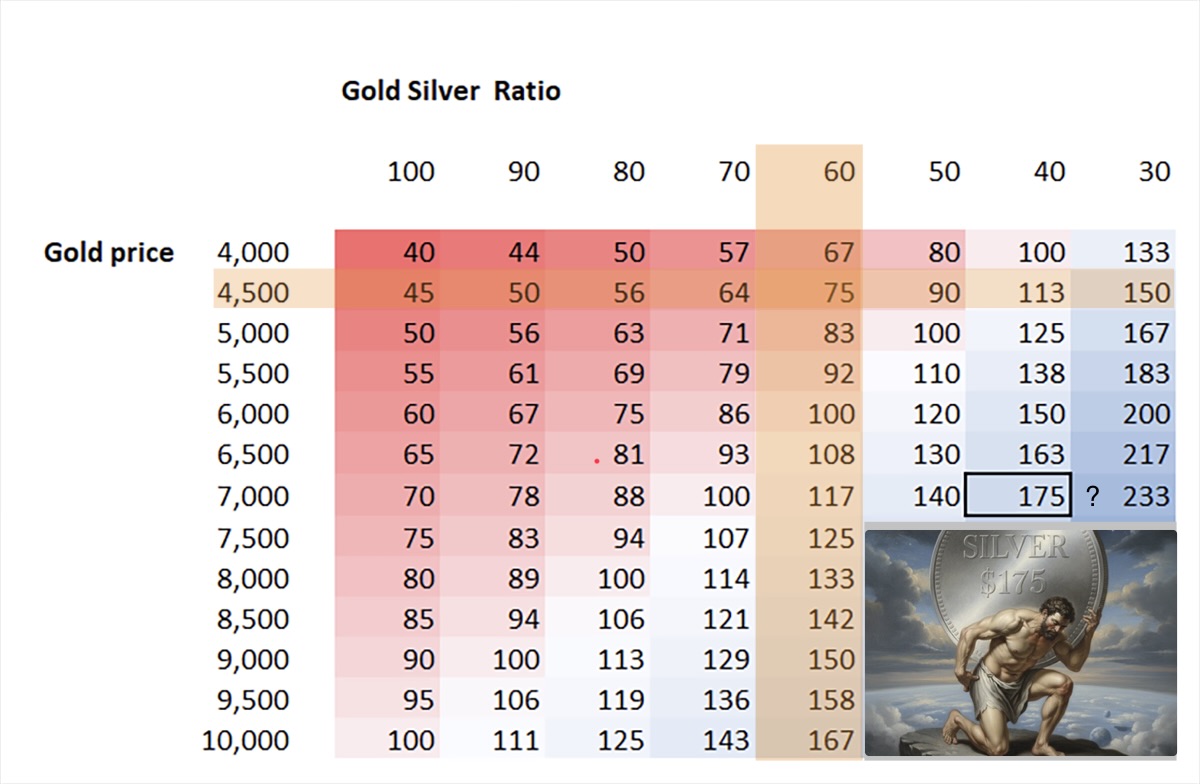
The world is on track for entirely new silver and gold price levels as central planners double-down on their destructive monetary policy action,
undermining the purchasing power of their currencies, and creating physical metal demand ending the London silver and gold promissory note price fixing system that has operated there since 1987.
Ever since JP Morgan shifted their physical bullion desk to Singapore the Asian-hour paper silver selling have become a feature.
Today the now-familiar 2 a.m. “Singapore Slam” hit the silver price again. This time, the script failed.
Indian buying swallowed the hit almost instantly and price snapped back, exposing something the mainstream never talks about:
physical accumulators are now stronger than paper shorts.
The gold standard was a monetary system that defined a unit of a nation’s currency as a fixed weight of gold and made the two mutually exchangeable.
For much of modern history, several versions of this pairing served as the foundation of global trade and finance. Under the gold standard,
governments promised to redeem paper money for a defined amount of gold on demand, which made the value of currencies stable and predictable.
Gold has been living a double life: one price for the Western banking cartel, another for the rest of the planet.
The split between “London‑hours gold” at a synthetic $3.76 dollars and “rest‑of‑world gold” heading toward $40,000.00 dollars is not a mathematical party trick;
it is a warning label. It says the real market —the one that settles in metal, not excuses— has already walked away from the West’s price‑suppression theater.
CME Group (Chicago Mercantile Exchange) brought the entire futures universe to a standstill just as banks tapped a staggering $24.4 billion from the Federal Reserve’s Standing Repo Facility—
all during a thin, half-day holiday session when the real action should have been months away from typical quarter-end stress.
The shutdown spanned FX, Treasuries, equity indexes, and crucial metals contracts like silver, locking out traders everywhere while price discovery went dark.

SAM Precious Metals, one of the Middle East’s leading accredited precious-metals refineries, has produced the world’s largest silver bar –
an extraordinary Guinness World Record-breaking creation weighing 1971 kgs, reflecting the UAE’s founding year and engraved with the map of the country.
The bar was unveiled at the Dubai Precious Metals Conference 2025 (DPMC),
where it immediately drew global attention as a landmark achievement for the region and a striking demonstration of Dubai’s expanding capabilities in regulated precious-metals innovation.
When the world’s largest creditor stops subsidizing everyone else’s debt, the entire
architecture of global finance must be rebuilt. That moment arrived on November 10, 2025.
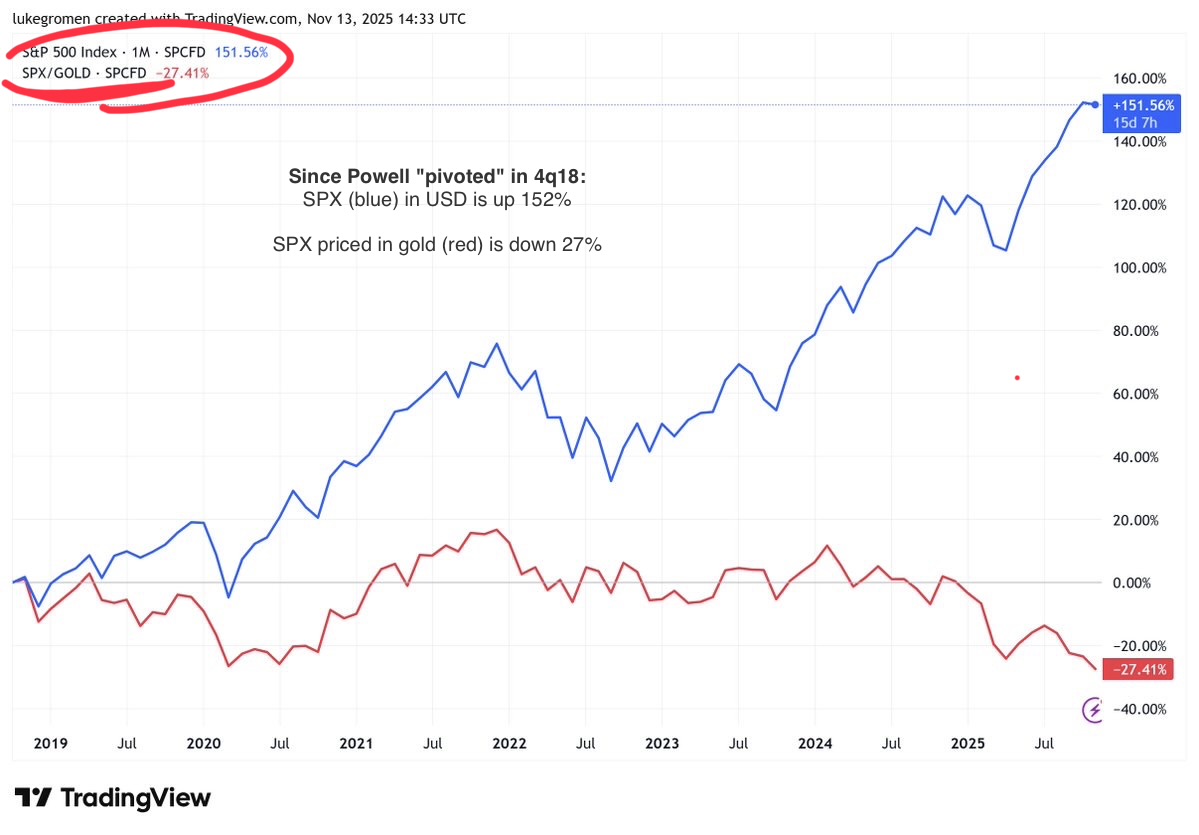
The return of the S&P 500 priced in USD or Gold
Luke Gromen, November 13, 2025
”China’s silver export ban exposes the West’s hollow paper markets just as Washington prepares to call silver “essential.”
Perfect timing: the nation that offshored industry now finds itself resource‑starved.
The empire of IOUs meets physical reality—America can declare Silver essential… Yeah that Silver, the one thing it no longer controls.” - Jon Forrest Little
Silver has experienced three spectacular bull runs over the past century, each driven by distinct macroeconomic, geopolitical, and supply-demand dynamics.
Yet the present cycle is fundamentally different—a convergence of global mining stagnation and surging multi-sector demand
threatens to ignite a much more consequential and potentially prolonged price explosion.
1913 was a terrible year for America and human freedom.
It was the year US Congress passed the Federal Reserve Act and ratified the 16th Amendment to the US Constitution, which authorized a federal income tax.
At first glance, these two unfortunate developments may seem unrelated. Yet what are the odds that the US would adopt both a central bank and an income tax in the very same year?
There is a saying about political struggle: "First they ignore you, then they laugh at you, then they fight you, and then you win."
The Gold Anti-Trust Action Committee, gets the point about struggle.
When GATA began 27 years ago central banks were furiously attacking gold with sales, leases, and derivatives, and gold was going down.
Now many central banks are furiously acquiring gold, and gold is going up. But the same principle is at work,
the principle articulated in Secretary Kissinger's office back in 1974: Control of gold is control of the world.
Without raw materials and creative innovations, there is neither progress nor prosperity.
Recently, El-Erian posted a tweet that caught the attention of Bloomberg analyst John Authers:
"What if stock-market gains were measured in gold instead of dollars?
As John Authers notes, U.S. stocks denominated in gold have been in decline since the dot-com bubble burst 25 years ago.
Stocks elsewhere have done even worse."
The London silver market seized with no silver liquidity at one point on Friday October 10, 2025 indicating the ‘free float’
of silver available to market in London is effectively near zero despite large vault holdings of silver there.
There is now a global shortage of physical silver while there are billions of oz. of cash promissory note contracts of immediate ownership and immediate
delivery of silver extant in the London market.
And the veil has now been lifted on the London promissory note cash silver market that will induce further holders of these contracts to demand immediate delivery.
The world’s richest nations are out of fiscal options. Even The Economist now admits debt can’t be repaid and growth won’t fix it.
When governments inevitably inflate away currencies, it is a straight-up admission that our 'public' debts have us all in checkmate.
When trust itself is at risk, only one asset has held both global trust and value for five thousand years.
For several days now, the financial markets have given the impression of order and recovery.
However, all signs indicate that the system is being propped up by increasingly precarious artifices.
A market that trades twelve times its own value in twenty-four hours is no longer a market:
it is a closed circuit, fueled by mirror trading and automated wash trades.
Behind these superficial manipulations lies a much deeper structural imbalance:
the dominance of fiscal policy over monetary policy – in other words, fiscal dominance.
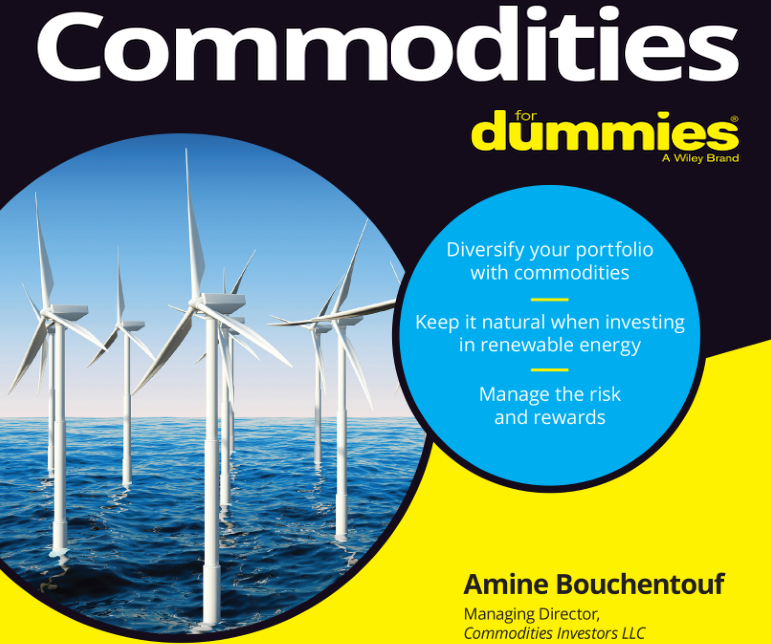
Commodities have grown into their own legitimate and respected asset class.
This book "Commodities For Dummies"(2023) 3rd Edition, is to offer you a comprehensive guide to the commodities markets and show you a number of investment strategies to help you profit in this market.
You don’t have to invest in just crude oil or gold futures contracts to benefit.
It was the most glorious example of Uncle Sam shooting himself in the foot—and not just once, but point blank, both barrels, on the world stage.
Executive Order 14024, signed in 2022, was hailed in Washington as a “strategic triumph.”
That single piece of paper—Executive Order 14024—was supposed to punish Moscow. Instead, it punished the dollar. The world started escaping America’s financial reach.
And what asset can’t be frozen, hacked, canceled, or sanctioned? Gold.
Apparently broader confidence in the global financial system seems to be weakening further, in a world of weaker growth and rapid rising debts.
When monetary expansion significantly outpaces productive economic growth, the value dilution becomes evident.
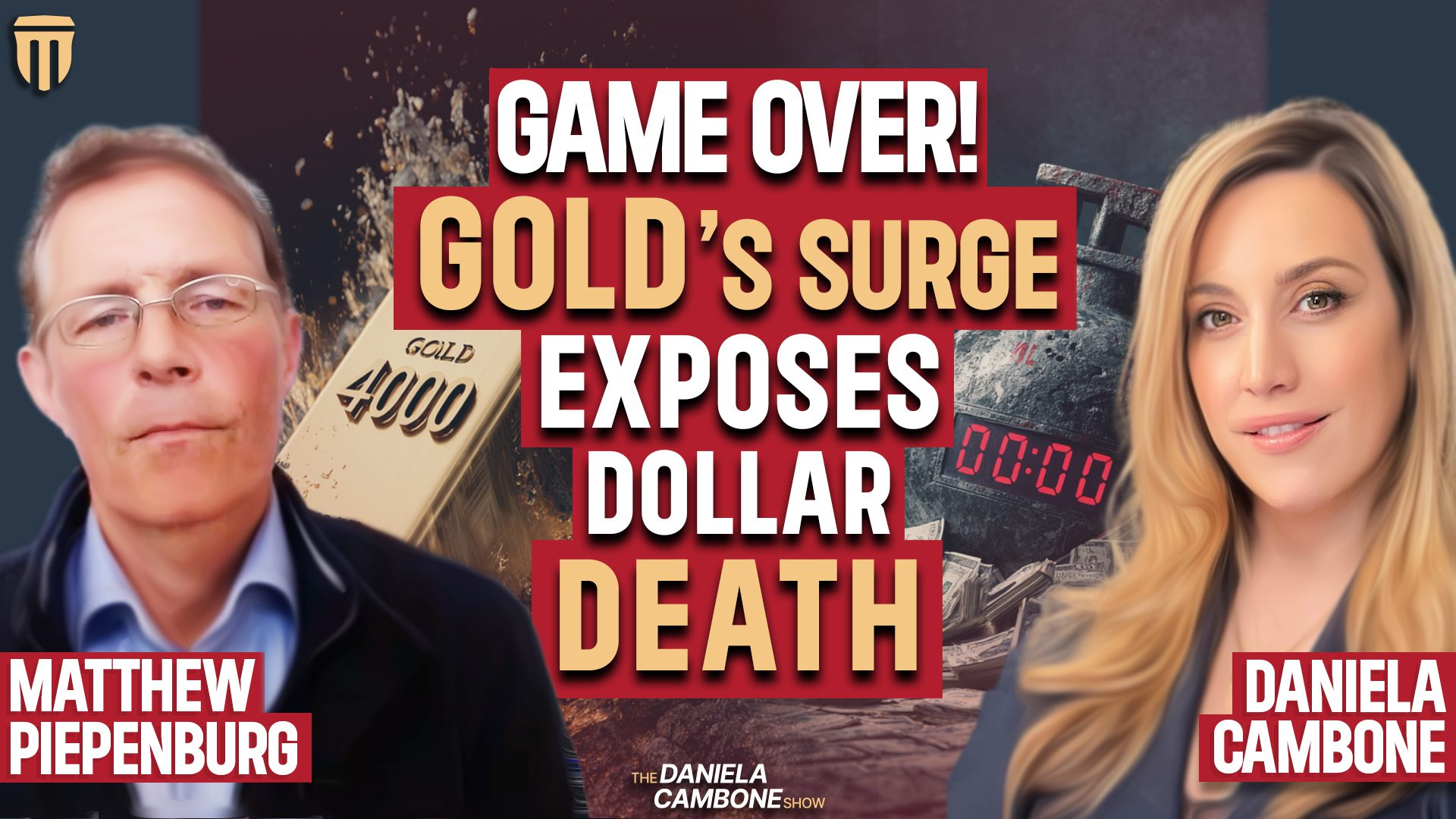
Gold just shattered the $4,000 barrier—a milestone decades in the making.
Yet beneath the celebration lies a far darker reality: a $300 trillion global debt bomb and a deliberately rigged dollar system that’s reaching its breaking point.
For centuries, collapsing empires have chosen the same escape route—currency debasement to monetize debt. The U.S. is now following that script to the letter.
When paper lies multiply, real metal wins. Seize the impending breakout before the masses wake up.
Global silver markets are approaching a critical inflection point as the disconnect between paper and physical silver reaches extremes not seen before.
According to the latest data from the London Bullion Market Association (LBMA),
free-floating inventories have plunged to just 135 million ounces — roughly half of the market’s daily trading volume.
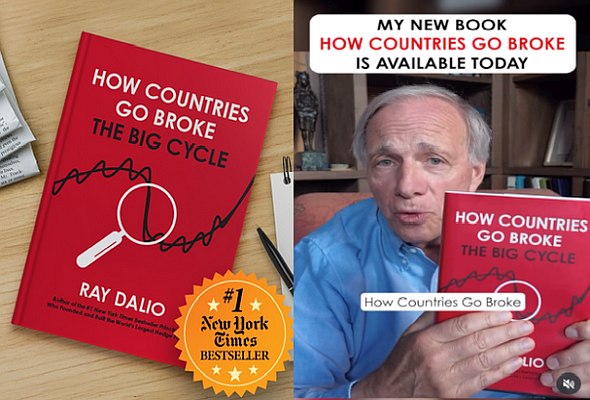
In Ray Dalio's newest book, How Countries Go Broke he describes the process by which societies create credit, then misuse it, and ultimately liquidate it.
He shows through historical examples a repeating process that typically takes about 80 years to unfold.
Ray's "Big Debt Cycle" resembles those of others like Neil Howe, Peter Turchin, Martin Gurri, and George Friedman.
Despite different starting points, they all conclude a crisis period is either approaching soon or already underway.
Industrial demand for silver is experiencing a historic boom, especially with China’s dominance across solar manufacturing, AI deployment, and auto production (including EV giants like BYD).
Now China's $100/oz sudden freeze on all on-the-spot silver trades and fund subscriptions unleashes a supply deficit.
Forget what economics textbooks taught about supply and demand—the silver market is entering the realm of the "Giffen good".
Normally, rising prices put off buyers, but right now, every dollar higher brings a new wave of desperate investors storming the gates.
Silver’s bull run isn’t just strong—it’s rewriting the rules.
For decades, the 60/40 portfolio — 60% stocks and 40% bonds—set the standard in institutional investing.
Gundlach recently forecasted that gold could hit $4,000 per ounce before year end,
suggesting that even a 25% gold weighting in portfolios is not excessive in the current environment.
Both institutional and retail investors are headed for safety: allocations to gold are at multi-generational highs,
and market forecasters are openly talking about gold prices the likes of which haven’t been seen since the 1970s.
Gold’s latest ascendancy is more than a bull run—it’s a global indictment.
Fears of runaway US debt, US policy, trade wars, and eroding dollar confidence are driving investors from Treasuries—sparking a rush for gold’s safety and gold drags her little sister silver along.
Washington’s real play now is a shift to stablecoins “backed” by Treasuries.
How to Listen When Markets Speak
Lawrence G. Mcdonald - A bestselling author and leading expert on market risk
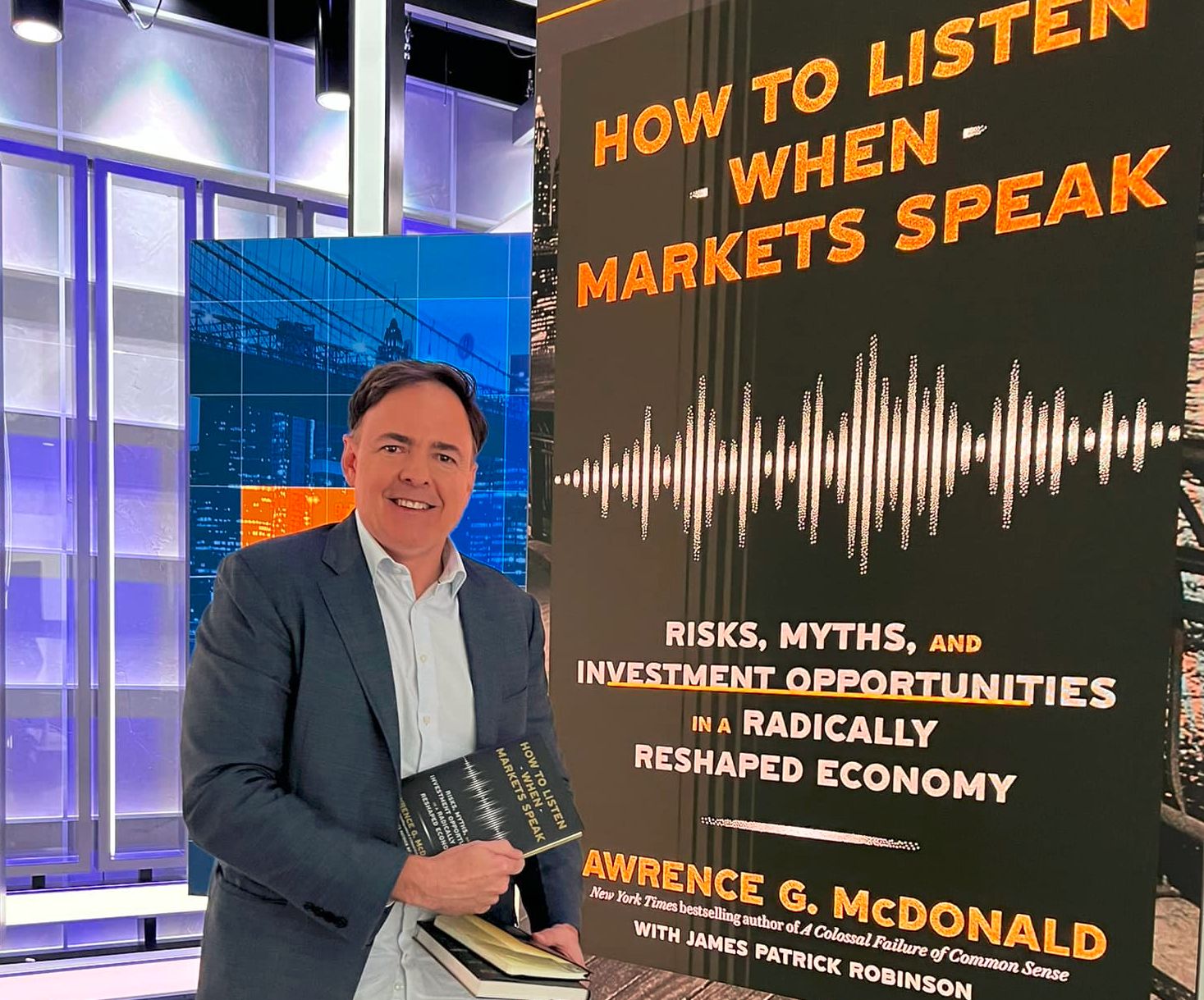
From Wall Street to the White House, the fantasy of an eventual 'return to normal' is still alive and well, nurtured by dangerously outdated theories.
But the economic world as we know it and the rules that govern it are over.
In the coming decade, we will witness sustained inflation, a series of sovereign and corporate debt crises,
and a thundering of capital out of financial assets into hard assets and few are prepared.
In the past few months Chris Marcus of Arcadia Economics has been working on a silver report,
with the goal of providing an overview of the market, what's led us here, what to expect going forward,
and some of the important yet rarely addressed questions that have been left unanswered.
The report further discusses persistent silver market deficits, why they are likely to continue or worsen,
and why silver has underperformed gold during recent rallies, even at higher prices.
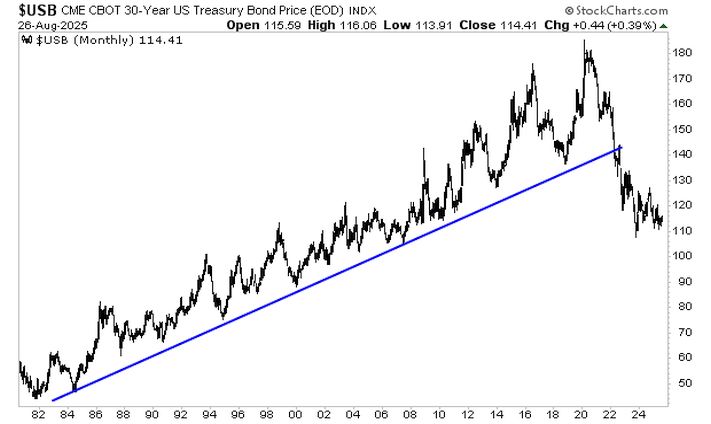
The single most important chart in the world is flashing “-DANGER- ”.
To be clear, the U.S. has had a debt problem for years.
That’s nothing new. What IS new is that the bull market in bonds, the macro setup that allowed the U.S. to issue all this debt is OVER.
This is THE most important chart in the world. It’s a chart of the 30-Year U.S. Treasury.
William Strauss and Neil Howe's generational theory, first articulated in their 1991 book "Generations" and refined in 1997's "The Fourth Turning,"
posits that history moves in cycles called "saecula".
Each saeculum lasts approximately 80-100 years—the span of a long human lifetime—and contains four turnings of roughly 20-25 years each.
These turnings are like seasons: Spring (First Turning/High), Summer (Second Turning/Awakening), Autumn (Third Turning/Unraveling), and Winter (Fourth Turning/Crisis).
The Fourth Turning (Crisis) brings secular upheaval—usually war or revolution—that destroys the old order and creates a new one.
Industrial demand is the fuel, but “monetary” mania is the match.
Here’s the rub: silver makes its craziest moves when central banks, ETFs, and anxious investors pile in as the financial world wobbles.
As both Moscow and Riyadh line up for physical ounces more will follow.
Meet David Bateman. Not Bruce Wayne, but close.
He’s the billionaire tech founder (of Entrata), and now, apparently, the newest self-styled guardian of sound money.
Bateman isn’t mincing words. He’s laying out a thesis that many gold and silver bugs have whispered for years:
the system is rigged, it’s failing, and the exit paths are narrowing.
The most significant driver of the shift to investment-grade gold is the China Banking and Insurance Regulatory Commission's (CBIRC) March 2025 mandate,
requiring insurance companies to allocate at least 1% of their assets to physical gold.
By converting dollar-denominated assets (such as U.S. Treasuries) into physical gold,
China is not only diversifying its reserves but also signaling a shift in global financial power.
If you like to educate yourself on the Trump's monetary reset topic but you don’t want to slog through
Stephen Miran’s dense 40-page white paper,
Matt Smith of International Man has already done the hard work—connecting the dots.
As he put it: “Succeed or fail, Trump’s plan will impact all of us and our investments.
I confess I’m delighted "Team Trump" sees the problem… has a plan to avoid the worst, and catapult the U.S. to new prosperity.
But what they need to do will not come without pain. A LOT of pain.”
Gold is one of the most useful metals in the world.
Due to its utility, coupled with its scarcity, gold is also one of the most valuable metals in the world.
The metal’s inherent physical and chemical properties make it useful in many industrial and technological applications.
This is why we see gold increasingly used in the tech sector.
In fact, gold would probably be used even more if it weren’t so rare and expensive.
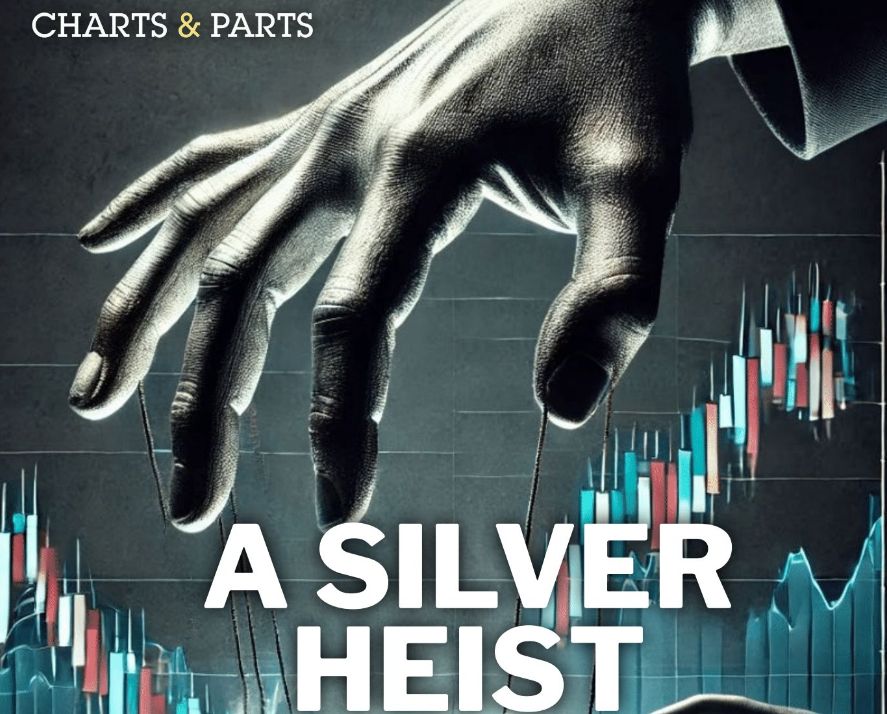
Everything in silver is getting so, so stretched.
It's hard to imagine this game going on much longer.
Harder still to imagine what happens when it ends.
This isn’t just about silver.
It’s about fragility, exposure, and cracks in a system designed to hold -- until it can’t.
Modern Monetary Theory (MMT) is a new term (since 1993) for printing paper money out of thin air, but coin-clipping is as old as time.
In fact, a major milestone in fiat money took place 60 years ago, on June 3, 1965, when President Lyndon B. Johnson (LBJ)
wanted to push all his federal chips in on “Guns and Butter” to fund the Vietnam War to the full.
There was virtually no inflation in America’s first 150 years
but the truly rapid attack of inflation came after LBJ took silver out of America’s coins as a result of the Coinage Act of June 3, 1965.
Throughout history, the cycle of war and currency debasement has repeated itself with ruthless predictability.
The recent escalation between Israel and Iran—marked by Israeli strikes on Iranian nuclear sites and Tehran’s retaliatory missile and drone attacks—reveals a brutal truth:
war is not just about security, sovereignty, or ideology. At its core, war is a business.
'All wars are bankers’ wars — How war profiteering enslaves workers and why gold and silver offer a way out.
For centuries, gold has shimmered at the heart of human commerce.
Now, as the world teeters on the precipice of a new financial epoch, gold has reclaimed its throne,
overtaking the euro as the second-most important global reserve asset, according to the European Central Bank.
The implications are seismic: we are witnessing not just a shift in asset allocation, but a profound transformation in the architecture of global trust.
The Musk-Trump Meltdown and Silver’s Breakout, what do these two stories have in common? Both reveal a shift. One is a fracture in a powerful relationship.
The other is a breakout in a long-overlooked market. Both speak to volatility and realignment. Both challenge us to think beyond the surface.
The U.S. is losing, and losing badly, to the Global South.
Evidence is that in the current economic turmoil, the dollar is being shunned while gold has been surging.
In other words, in contrast to previous periods of turbulence, gold and critical commodities have replaced the dollar and dollar bonds as the shelter of choice.
I’m not giving up on America, but I’m hardly optimistic.
Pessimism is justified because there seems to be no recognition of the problems, more than half a century in the making, that have led to our decline.
For a democracy to be great, it must see that the key distinction isn’t between dullards and geniuses.
Rather it’s between those with true freedom of thought and those who blindly follow the herd, via Twitter and its ilk.
The Four Noble Truths of Buddhisme deal with the nature of suffering, its cause, the possibility of its cessation, and the path to achieve that cessation.
In this article we look at the five noble truths in our society and the possible cessation of the class divide coming from owning silver and gold.
Silver investors are usually interested in which countries produce the most ounces of the metal.
However, it’s also worth looking at silver reserves, which are a country’s economically mineable silver supply.
This overview of top silver countries by is based on the US Geological Survey’s most recent data on silver.
The United States has crossed a Rubicon of fiscal credibility.
Moody’s historic downgrade of America’s credit rating from Aaa to Aa1 isn’t merely a technical adjustment-it’s a flashing red siren about a debt crisis.
The Federal Reserve also recently made a stealthy return to quantitative easing, buying $43.6 billion in U.S. Treasuries over four days without public attention.
This "stealth QE" is seen as a quiet monetary easing rather than normal policy, signaling concerns about financial stability.
The "In Gold We Trust Report 2025" is here called - The Big Long -
Ronald-Peter Stöferle & Mark J. Valek, May 15, 2025
The world's most anticipated gold market report has just (15 may) been released, the In Gold We Trust report 2025 – The Big Long.
Almost 500 pages of ready knowledge and specialist experience.
After "the tour de force" through the diverse gold universe, Ronnie and Mark sincerely hope that you enjoy reading their #IGWT25 as much as they enjoyed creating it!
Conclusion: Gold is unique in the financial system, it is establishing itself as a neutral, liquid, and counterparty-free anchor of confidence and thus
as a possible cornerstone for "Bretton Woods III". Also Gold has proven to be a reliable hedge in past recessions and bear markets and diversifies the
portfolio in adverse scenarios such as high inflation and stagflation.
Call it "Chinese Food" for thought, consumption, or sentiment adjustment, but the fact that the Chinese have thrown a peace offering
at the Trump administration is a testament to the severity of the damage to the U.S. bond market during the early April façade.
To say that tariffs are "good" for America is about as inane a comment that could ever be levied,
but what makes it even more absurd is that 100% tariffs levied on April 7 were great,
but the revisions down to 10% tariffs this week are now perceived as "even greater."
The Trump administration seeks to restore dollar hegemony and the re-shoring of US manufacturing through intentional policy shocks.
Like 1971, DC still thinks it can run a world wherein it’s “our dollar, and the rest of the world’s problem”.
But in the backdrop of a rising BRICS, clear de-dollarizing trends, central bank gold stacking, gold’s Tier-1 status at the BIS,
a drying COMEX, IMF gold telegraphing, a neutering petrodollar and failed US Treasury auctions,
the world is no longer willing to be the dog wagged by the tail of the USD.
- Older Posts -
Physical gold and silver remain THE ONLY reliable hedges against reckless and untrustworthy governments and bankers.
Whilst bonds are the barometer of trust and faith in a system, gold is the talisman of fear
In nature everything is connected, everything is interwoven, everything changes with everything, everything merges from one into another.
This observation, more than ever, applies to the current gold market.
Very few people today think about the sustainable value of all their various baseless fiat currencies.
(Lee Quaintance & Paul Brodsky)



 HOME
HOME
FAV_COMPS
|